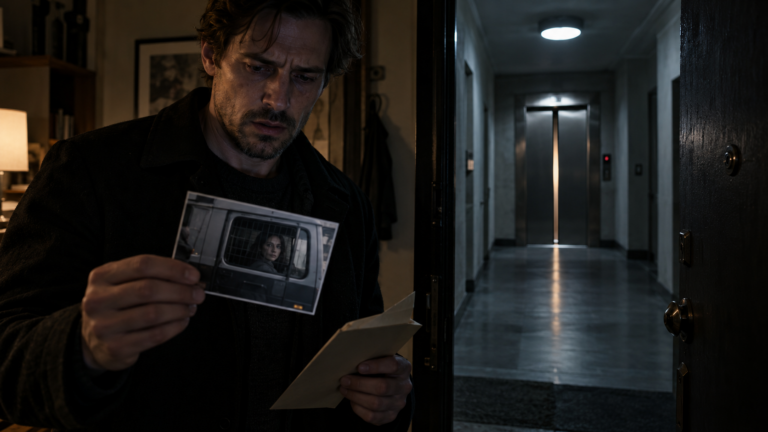
PART ONE – THE WOMAN SHE BROUGHT HOME
When Camille Verhaegen first brought Léonie Laurent into her house, nobody thought of it as charity.
That word would have embarrassed Léonie, and Camille disliked making people feel indebted to her.
Camille was thirty-two then, the chief operating officer of a Brussels logistics and infrastructure group called Declercq Maritime Europe. The company belonged, technically, to her husband Adrien’s family, though much of its recent growth had come from Camille.
She had a reputation for being difficult in precisely the way that successful women were often called difficult after cleaning up other people’s mistakes.
She read contracts before meetings.
She remembered numbers.
She rarely raised her voice.
When people tried to corner her, she asked questions until they regretted beginning.
Adrien was forty-two, ten years older than her, handsome in an unremarkable, expensive way. He had inherited his father’s surname, shares, network and natural belief that rooms would eventually accommodate him.
When Camille first married him, this confidence had seemed calming.
Later, she would understand that the same quality could become laziness when life stopped challenging him.
They lived in a renovated townhouse in Uccle, with tall windows, limestone floors and a narrow garden enclosed by old brick walls.
Adrien’s mother, Geneviève Declercq, lived twenty minutes away in a large house that had belonged to the family for three generations.
Geneviève was not warm.
She was not cruel either.
She had the unnerving habit of looking at people as though she were waiting for them to finish performing.
She liked Camille.
Not instantly.
But eventually, deeply.
“Adrien married above himself,” she once told a cousin at Christmas.
Camille overheard.
Adrien did too.
He laughed.
Camille did not know whether Geneviève had meant status, intelligence or endurance.
Possibly all three.
Camille had known Léonie since Léonie was sixteen.
Léonie’s mother had cleaned offices in the commercial building where Camille worked during her first years in finance.
When Léonie’s mother became ill, the girl began spending evenings in the lobby waiting for her after shifts.
Camille noticed her because she always had books.
Not novels.
Textbooks.
Economics.
Languages.
Admissions guides.
One night Camille asked, “What are you studying for?”
Léonie looked suspicious.
“My entrance examinations.”
“For?”
“A school I probably won’t get into.”
“That wasn’t my question.”
Léonie smiled despite herself.
The school was one of the most selective business programs in Belgium.
She got in.
The problem was money.
Her mother could cover rent or tuition, but not both.
Camille paid the first year anonymously.
Léonie found out anyway.
She confronted her outside the office.
“You can’t do that.”
“I already did.”
“I can’t repay you.”
“I didn’t ask.”
“That makes it worse.”
Camille studied her.
“Then graduate.”
Léonie stared.
“That’s it?”
“No. Preferably graduate well.”
It was the beginning of something that looked, for years, like family.
Camille helped with tuition.
Internships.
Books.
A laptop when Léonie’s broke.
She never introduced her as a charity case.
When Léonie’s mother died four years later, Camille was one of the first people at the funeral.
Adrien came too.
At twenty-three, Léonie began spending holidays with them because she had nowhere else she particularly wanted to go.
By twenty-five, she had her own bedroom in their house.
By twenty-six, she was living there temporarily while completing a postgraduate program in corporate communications.
Temporary became normal.
And for a while, normal was lovely.
There were photographs from those months that Camille later hated seeing.
Léonie laughing at the kitchen island with flour on her cheek.
Adrien opening wine while Camille cooked.
All three eating Sunday breakfast in old clothes.
Geneviève pretending not to enjoy Léonie’s jokes.
Summer evenings in the garden.
Birthdays.
Board games.
A weekend in Zeeland where Adrien complained about the wind and Léonie laughed until she nearly fell off a bicycle.
Looking back, Camille could find signs.
That was the dangerous luxury of hindsight.
At the time, they were small.
Léonie laughed too hard at Adrien’s stories.
She asked his opinion when Camille’s would have been more useful.
She began dressing differently when she knew he would be home.
She remembered how he took his coffee.
But people noticed things about people they lived with.
Camille noticed those things about Léonie too.
The first person who actually saw the problem was Elias Vandenberg.
Elias was twenty-eight, Léonie’s university friend.
Quiet.
Tall, thin, slightly awkward.
He worked as a structural engineer and had the habit of standing half outside conversations until someone asked him something directly.
Léonie introduced him at a dinner.
“This is Elias. He thinks every building in Brussels is structurally disappointing.”
“I have never said that.”
“You say it with your face.”
Camille liked him immediately.
Adrien found him boring.
Elias was in love with Léonie.
Everyone could tell except Léonie.
Or perhaps Léonie could tell and preferred things that way.
One evening in November, Camille came home late from Rotterdam.
She entered through the kitchen and heard Léonie laughing.
Adrien was leaning against the counter.
Léonie stood very close to him.
Nothing was happening.
That was what made Camille feel ridiculous for stopping.
Adrien saw her.
“There she is.”
Léonie turned.
“You’re early.”
“My train was on time.”
Camille set down her bag.
“What are you two doing?”
“Drinking your wine,” Adrien said.
“I can see that.”
Léonie smiled.
“Adrien was telling me about Geneva.”
“What about it?”
Adrien shrugged.
“A conference.”
Camille looked at the two glasses.
Then at the open bottle.
Then at Léonie.
The feeling passed.
Mostly.
At dinner, Léonie sat beside Adrien instead of her usual chair.
That meant nothing.
Later, she touched his forearm while laughing.
That also meant nothing.
Camille hated herself for noticing.
That night she told Adrien:
“I think Léonie has a little crush on you.”
He laughed.
“You’re serious?”
“Yes.”
“She’s practically your little sister.”
“Exactly.”
Adrien kissed Camille’s forehead.
“You’re tired.”
Camille pulled back.
“That is an irritating answer.”
“I don’t know what you want me to say.”
“Nothing. I’m telling you what I noticed.”
“Well, I haven’t noticed it.”
“All right.”
“Are you jealous?”
Camille stared at him.
Adrien immediately smiled.
“Bad joke.”
“Yes.”
“I’m sorry.”
She let it go.
That would become a pattern.
Elias did not.
A few weeks later, he met Léonie at a café near Place Flagey.
She spent nearly half an hour talking about Adrien.
How intelligent he was.
How neglected he seemed.
How Camille was always travelling.
How difficult it must be for a man to be married to someone who treated every conversation like a board meeting.
Elias listened until he stopped pretending this was normal.
“Do you hear yourself?”
Léonie frowned.
“What?”
“You’ve been talking about someone else’s husband for thirty minutes.”
“He’s my friend.”
“He’s Camille’s husband.”
“Yes, Elias. I know.”
“Do you?”
Her expression changed.
“That’s insulting.”
“I’m trying not to insult you.”
“You’re doing badly.”
Elias leaned forward.
“She paid for your education.”
Léonie went still.
He immediately regretted the wording.
“That’s not what I meant.”
“No. Say it.”
“I’m saying she loves you.”
“I know.”
“Then stop looking at her marriage like it’s something she doesn’t appreciate enough.”
Léonie laughed bitterly.
“You think you know everything because you sit quietly and watch people.”
“No.”
“You do.”
“I know what I’m seeing.”
“What are you seeing?”
Elias hesitated.
He loved her.
That made the answer dangerous.
“I think you want him.”
Léonie stared.
Then laughed.
Not because it was funny.
“You’re jealous.”
Elias said nothing.
That was answer enough.
Léonie leaned back.
“Oh.”
“Forget it.”
“You are.”
“I said forget it.”
“So this whole lecture is because you want me.”
“No.”
“Yes.”
“I’m telling you not to do something stupid.”
“You’re telling me because you want me to choose you.”
Elias stood.
She looked surprised.
“I’m leaving.”
“Elias.”
“Camille has been good to you.”
“I KNOW.”
Several people turned.
Léonie lowered her voice.
“I know.”
“Then act like it.”
He left.
She did not follow him.
The first time Adrien kissed Léonie, she was the one who moved closer.
Months later, they would disagree about this.
Not because either had forgotten.
Because both wanted less responsibility.
It happened after Camille left for Frankfurt for three nights.
Adrien had argued with Camille before she left.
Not about Léonie.
About work.
Adrien believed Camille had embarrassed him during an executive meeting by correcting revenue projections he had presented.
Camille said she had corrected numbers.
Adrien said there was a difference between being right and making someone look wrong.
Camille said the numbers had already made him wrong.
He slept in the guest room.
The next morning, she left.
That evening Léonie found him drinking alone.
She sat with him.
He complained.
At first, she defended Camille.
Then less.
Then not at all.
“She doesn’t realise how she talks to people,” Léonie said.
Adrien looked at her.
“She talks to me like I work for her.”
“You technically do.”
He laughed.
Léonie smiled.
Then said, “That’s not what I meant.”
They drank.
They talked about Camille.
That should have been the warning.
Instead, it became intimacy.
Adrien said:
“You understand me better than she does.”
Léonie looked at him for too long.
“Maybe because I listen.”
He kissed her.
She did not pull away.
Afterward, Adrien panicked.
Léonie did not.
“This can’t happen again,” he said.
“All right.”
“I mean it.”
“I said all right.”
“You don’t sound upset.”
“Should I?”
He stared.
“Léonie.”
She picked up her glass.
“You kissed me.”
“You kissed me back.”
“Yes.”
“This is Camille.”
“I know who Camille is.”
“Then why are you acting like this?”
Léonie looked at him.
“Like what?”
“Calm.”
“Would you prefer crying?”
Adrien ran a hand over his face.
“I love my wife.”
Léonie smiled slightly.
“I know.”
That smile would later bother him more than anger would have.
Camille returned.
Léonie hugged her.
Adrien kissed her.
They ate together.
Nothing changed.
Then everything did.
Léonie became bolder.
She walked into rooms when Camille and Adrien were talking privately.
She wore Adrien’s old university sweatshirt one Sunday morning.
When Camille noticed, Léonie said:
“He gave it to me because I was cold.”
Adrien said nothing.
Camille looked at him.
“You gave her your clothes?”
“It’s a sweatshirt.”
“I know what it is.”
“Then why are we talking about it?”
Léonie stood.
“I’ll change.”
Camille turned to her.
“That isn’t necessary.”
Adrien sighed.
“Camille.”
“What?”
“You’re making this strange.”
Camille stared at him.
“I’m making it strange?”
Léonie quietly left.
Adrien lowered his voice.
“You’re embarrassing her.”
“She is wearing your shirt.”
“It is not a shirt.”
Camille actually laughed.
“Excellent distinction.”
Adrien walked away.
That was the first time Camille thought:
Something is wrong.
Not proof.
Not yet.
But wrong.
Elias saw Léonie again in January.
She apologised for their café argument.
Not sincerely enough.
He accepted anyway.
He still loved her.
That made him weak in predictable ways.
“You were right,” she said.
His stomach dropped.
“About what?”
She looked at him.
“Adrien.”
Elias said nothing.
She smiled.
A small victorious smile.
“He kissed me.”
Elias felt physically cold.
“When?”
“A while ago.”
“And?”
“And nothing.”
He knew she was lying.
“Léonie.”
“What?”
“Tell Camille.”
Her expression hardened.
“Why?”
“Because she deserves to know.”
“Nothing happened.”
“You just said he kissed you.”
“It was one kiss.”
“Then telling her should be easy.”
Léonie stared at him.
“You always choose her.”
“What?”
“Every time we talk about this, you talk like Camille is some saint.”
“She took care of you.”
“There it is again.”
“It matters.”
“So I owe her my whole life?”
“No.”
“My feelings?”
“No.”
“My choices?”
“You owe her basic decency.”
Léonie stood.
“Maybe Adrien isn’t happy.”
“That does not make him available.”
“He’s a grown man.”
“Yes.”
“And I’m a grown woman.”
“Yes.”
“So stop talking to me like I’m a child.”
Elias looked up at her.
“Then stop behaving like consequences are for other people.”
She left.
This time, he did not chase her.
The affair lasted four months before Camille found out.
Not through lipstick.
Not through a hotel receipt.
Not through a dramatic confession.
Through a calendar.
Camille was looking for Adrien’s travel schedule.
A private appointment appeared three times over six weeks.
Same address.
An apartment in Ixelles.
She recognised it.
Léonie had mentioned a friend living there.
Camille sat at the kitchen table with Adrien’s tablet in front of her.
She did not scream.
She waited.
Adrien came home at seven twenty.
He saw her.
Then the tablet.
Then her face.
“What?”
Camille turned the screen toward him.
“Who lives here?”
His expression changed.
Only slightly.
Enough.
Camille nodded.
“All right.”
“Camille.”
“Who lives there?”
“Can we talk?”
“We are.”
He put down his coat.
“She does.”
Camille’s mouth became dry.
“Léonie.”
“Yes.”
“And why have you been there?”
No answer.
“Adrien.”
He sat opposite her.
“I made a mistake.”
Camille stared.
“How many times?”
“Does that matter?”
“Yes.”
“I don’t know.”
She laughed.
“You don’t know.”
“I don’t mean literally.”
“Then answer literally.”
He looked away.
Camille stood.
“Get out.”
“Please.”
“Get out of this house.”
“It is my house too.”
Camille looked at him.
That sentence changed the temperature of the room.
Adrien realised it too late.
Camille nodded once.
“You’re right.”
“Camille.”
“It is.”
She went upstairs.
Adrien followed.
She turned.
“Do not follow me.”
“We need to talk.”
“No. You need to explain. I do not need to listen tonight.”
“Léonie-”
Camille stopped.
“Don’t say her name to me.”
“She’s upset too.”
Camille stared at him.
For the first time, her voice rose.
“SHE is upset?”
Adrien stepped back.
Camille laughed in disbelief.
“I paid for her university.”
“I know.”
“She lived in my house.”
“I know.”
“I introduced her to everyone as family.”
“I know.”
“She ate at my table.”
“Camille-”
“And you are telling me she is upset?”
“I’m not defending her.”
“You just did.”
Léonie was standing halfway down the stairs.
Neither had heard her.
Camille looked up.
Their eyes met.
Léonie had been crying.
That irritated Camille more than anything else.
“You.”
Léonie swallowed.
“Camille.”
“How long?”
Adrien said, “Don’t.”
Camille turned on him.
“Do not protect her in front of me.”
Léonie descended one more step.
“It wasn’t supposed to happen.”
Camille looked at her.
“That is what people say when something happens once.”
Léonie said nothing.
Camille nodded.
“Exactly.”
Léonie moved out that night.
Adrien did not.
Not immediately.
For the next month, he tried to repair the marriage.
Flowers.
Dinner reservations.
Promises.
Counselling.
Camille attended two sessions.
At the third, Adrien said something that ended it.
“I felt invisible.”
Camille looked at him.
The therapist asked:
“In the marriage?”
Adrien nodded.
Camille waited.
He continued.
“Everything became about her work.”
Camille asked:
“So you slept with Léonie?”
“That isn’t what I said.”
“It is what you did.”
“I am trying to explain how I got there.”
“You got there by taxi three times according to your calendar.”
The therapist intervened.
Camille held up a hand.
“No. I’m sorry.”
She looked at Adrien.
“Explain something else.”
“What?”
“Why her?”
Adrien’s face tightened.
Camille continued.
“There are millions of women in Europe.”
“Camille.”
“You chose the one person who would hurt me most.”
“I didn’t choose it like that.”
“You did every time you went back.”
Silence.
That was the day Camille decided to divorce him.
Léonie had assumed Adrien would leave Camille immediately.
He did not.
For five weeks, he kept saying he needed time.
Léonie became furious.
“You said you loved me.”
“I do.”
“Then why are you still there?”
“Because my life is there.”
“And I’m what?”
“That’s not what I mean.”
“It’s exactly what you mean.”
Adrien rubbed his face.
“Camille and I have twelve years together.”
“And?”
“And you can’t erase that.”
“I’m not asking you to erase it.”
“You are asking me to dismantle my entire life in a month.”
Léonie stared.
“You dismantled hers in an afternoon.”
He looked at her.
That was perhaps the most honest thing she ever said to him.
It did not make her kinder.
Only accurate.
By spring, the divorce proceedings began.
Camille did not fight over the townhouse.
She did not expose the affair publicly.
She did not contact Léonie’s university.
She did not call mutual friends and tell them what happened.
This confused Léonie.
She had prepared herself for war.
Instead Camille became quieter.
Professional.
Terrifyingly civil.
At one mediation session, Adrien said:
“You can be angry.”
Camille looked at him.
“I am.”
“You don’t act like it.”
“You are confusing restraint with forgiveness.”
He had no answer.
Léonie turned twenty-seven that summer.
Two weeks later, Adrien proposed.
Elias learned through a mutual friend.
He called her.
“Don’t.”
That was the first thing Léonie said.
“I haven’t said anything.”
“I know why you’re calling.”
“Do you love him?”
“Yes.”
“Does he love you?”
“Yes.”
“Then why do you sound angry?”
Silence.
Elias continued.
“You won.”
“Don’t say it like that.”
“Isn’t that what you wanted?”
“No.”
“What did you want?”
Léonie hung up.
The wedding was held in a renovated château outside Waterloo.
Smaller than Adrien’s first wedding.
More expensive.
Léonie wore ivory silk.
Adrien looked relieved rather than happy.
Geneviève attended.
That surprised everyone.
At the reception, she waited until dinner had begun.
Then she stood.
People assumed she was making a toast.
Adrien looked nervous.
Léonie smiled.
Geneviève held her champagne glass but did not raise it.
“I was asked whether I intended to welcome Léonie into the family.”
Adrien closed his eyes briefly.
Léonie’s smile vanished.
Geneviève continued.
“I will be courteous.”
A few guests shifted.
“I will not be cruel.”
Adrien whispered, “Mother.”
Geneviève ignored him.
“But I will not pretend that the way this began is something I respect.”
Silence.
Léonie’s cheeks reddened.
Adrien stood.
“That’s enough.”
Geneviève finally looked at him.
“No. You have confused my attendance with approval.”
“Sit down.”
People stared.
Geneviève’s expression barely changed.
“You betrayed your wife with a woman she treated like family.”
Léonie stood now.
“Mrs Declercq-”
Geneviève turned to her.
“And you accepted years of generosity from Camille before deciding you were entitled to her husband as well.”
Léonie went pale.
Adrien stepped between them.
“You are leaving.”
“Yes.”
Geneviève picked up her handbag.
“That was always the plan.”
She left.
The wedding continued.
Music resumed.
Dinner was served.
People danced.
That almost made it worse.
Léonie smiled for photographs with eyes that never softened.
Marriage did not make her feel safer.
It did the opposite.
For years, Léonie had believed that once Adrien chose her publicly, insecurity would disappear.
Instead, she became conscious of everything she had inherited from Camille.
The townhouse.
The family company.
The social circle.
Even the housekeeper occasionally called her Camille by mistake.
Adrien compared them without realising.
“Camille used to keep those documents downstairs.”
“Camille knew which supplier handled this.”
“Camille never liked that restaurant.”
Every mention felt like an intrusion.
Léonie started asking whether Adrien missed her.
At first he denied it.
Then he became irritated.
Then he stopped answering.
That was worse.
Camille still worked at Declercq Maritime Europe.
She had helped build too much of the company to resign immediately.
Geneviève supported her staying.
Adrien did not know how to object without looking petty.
Léonie hated it.
She began visiting the office under weak pretexts.
Lunch with Adrien.
Dropping off documents.
Charity committee planning.
One afternoon she entered Camille’s office without knocking.
Camille looked up.
“Can I help you?”
Léonie closed the door.
“I want you to leave.”
Camille stared.
“Leave what?”
“The company.”
“No.”
“You don’t need this job.”
Camille almost smiled.
“You have misunderstood my relationship with employment.”
“Adrien is uncomfortable.”
“Then Adrien can tell me.”
“He doesn’t want conflict.”
Camille leaned back.
“Neither do I.”
“So resign.”
“No.”
Léonie’s face tightened.
“You’re doing this deliberately.”
Camille looked at her for several seconds.
“Léonie.”
“What?”
“You slept with my husband in my house.”
Léonie flinched.
“You married him.”
She crossed her arms.
“And somehow you are standing in my office explaining that my continued existence makes you uncomfortable.”
“That isn’t what I said.”
“It is exactly what you said.”
“I’m his wife now.”
“Yes.”
“Then respect that.”
Camille’s expression changed.
Not anger.
Something colder.
“I respected your place in my life for eleven years.”
Léonie went quiet.
Camille continued.
“You should leave before you say something you cannot pretend you didn’t say.”
Léonie walked out.
Elias heard about the office confrontation from Léonie herself.
She still called him occasionally.
He no longer understood why.
Perhaps because he was the only person from her old life who had not completely abandoned her.
“You went to Camille’s office?”
“Yes.”
“Why?”
“She needs to move on.”
Elias stared at her over the café table.
“She divorced him.”
“She still works there.”
“She works there because she ran half the company.”
“She likes having power over us.”
“Léonie.”
“What?”
“You sound insane.”
Her face hardened.
“Don’t.”
“I mean it.”
“You always take her side.”
“This is not a side.”
“It is.”
“No. This is you being unhappy after getting exactly what you wanted.”
She stood.
“I shouldn’t have come.”
“No.”
Elias looked up.
“You shouldn’t have.”
For once, she seemed hurt.
He hated that he still cared.
The abduction happened six weeks later.
It was not sophisticated.
That mattered.
Real bad decisions rarely were.
Camille left the Brussels office after eight on a Thursday evening.
A dark passenger van was stopped near the underground exit.
She assumed it belonged to a contractor.
A woman stepped from the side door.
Camille recognised her.
Maya De Smet.
One of Léonie’s closest friends from university.
Camille stopped.
“Maya?”
Maya smiled nervously.
“Can we talk?”
“No.”
“It’s about Léonie.”
“That makes the answer more no.”
Camille moved toward her car.
Maya caught her sleeve.
Camille immediately pulled away.
“Do not touch me.”
The van door opened.
Another person was inside.
Then Léonie stepped out.
Camille stared.
For several seconds, nobody spoke.
“What are you doing?”
Léonie said:
“We need to settle this.”
Camille looked at the van.
Then back at her.
“No.”
She reached for her phone.
Maya grabbed her wrist.
Camille reacted instantly, twisting free.
“LET GO OF ME.”
The second person moved behind her.
Everything became fast and ugly.
Not cinematic.
Camille fought.
Someone pulled her arms back.
Her phone hit the pavement.
She shouted.
The underground exit was nearly empty.
Within seconds, they forced her into the van.
Camille was not unconscious.
She was not beaten.
That made the situation no less terrifying.
Her wrists were secured in front of her with plastic ties.
Léonie sat opposite her.
Maya looked increasingly sick.
“What the hell is this?” Camille asked.
Léonie said nothing.
“Untie me.”
“No.”
“You have ten seconds before this becomes the worst decision of your life.”
Maya whispered:
“Léonie, maybe we should stop.”
Léonie turned.
“Now?”
“I thought we were just going to scare her.”
Camille looked at Maya.
“Congratulations.”
Maya looked away.
The van began moving.
Camille stared at Léonie.
“What do you want?”
“I want you gone.”
“From the company.”
“From our lives.”
Camille laughed once.
“You kidnapped me because your husband remembers I exist.”
“Stop calling it that.”
Camille stared.
“What would you prefer?”
Léonie’s jaw tightened.
“You provoke me.”
“No.”
“You stay at his company.”
“My company too.”
“You speak to Geneviève.”
“She calls me.”
“You make everyone compare us.”
Camille leaned forward as far as the restraints allowed.
“I have not spoken your name voluntarily in months.”
Léonie’s eyes filled.
Camille saw it.
And understood.
This was not triumph.
This was panic.
Léonie had taken Camille’s place and discovered that taking a place did not make it hers.
The van stopped at an industrial storage yard outside the city.
Maya immediately said:
“This is too far.”
Léonie ignored her.
They moved Camille into an empty loading unit.
There were folding chairs.
A plastic table.
Bottled water.
It would later become obvious how much of this had been planned and how little had been thought through.
Camille sat.
Léonie paced.
Then she picked up one of the water bottles.
“You always look at me like I’m pathetic.”
Camille stared at her.
“I am tied to a chair.”
“Don’t do that.”
“Do what?”
“Talk like you’re above this.”
“I am literally the person you brought here against her will.”
Léonie opened the bottle.
Maya said:
“Léonie.”
Léonie threw the water into Camille’s face.
Camille jerked back.
Her hair and blouse became soaked.
The room went silent.
Maya looked horrified.
Camille slowly opened her eyes.
Water ran down her face.
Léonie was breathing hard.
Waiting.
For tears.
Fear.
Anything.
Camille looked directly at her.
“That made you feel better?”
Léonie’s expression broke.
“Shut up.”
“No.”
“SHUT UP.”
Camille’s voice stayed level.
“You wanted my husband.”
Léonie stepped closer.
“You got him.”
Another step.
“You wanted my house.”
“Stop.”
“You got that too.”
“STOP.”
“You wanted my place in the family.”
Léonie slapped both hands on the table.
“STOP TALKING.”
Camille flinched but did not look away.
“And you are still miserable.”
Léonie grabbed another bottle.
Maya caught her arm.
“That’s enough.”
Léonie turned.
“Let go.”
“No.”
“Maya.”
“No.”
The two women stared at each other.
It was the first real resistance Léonie had encountered that night.
And she looked stunned by it.
What Léonie did not know was that Camille’s company vehicle had a security tracking system.
She also did not know Geneviève had been trying to reach Camille since seven thirty regarding an urgent board document.
When Camille failed to answer, Geneviève called the office.
Security found Camille’s phone near the garage exit.
They checked the camera.
They saw the van.
Geneviève called the police.
Then she called Elias.
Not because they were close.
Because she had seen his name repeatedly connected to Léonie during the internal legal review after the divorce.
“Do you know where she would take Camille?”
Elias went silent.
“What happened?”
“Answer me.”
He did.
There was an old logistics storage site Maya’s brother used for event equipment.
Elias had been there once.
He gave the address.
Then got in his car.
The loading unit door opened forty minutes later.
Maya screamed.
Léonie spun around.
Camille did not.
She had heard vehicles outside.
Geneviève entered behind two police officers.
Elias was farther back.
His face when he saw Camille was not heroic.
It was devastated.
Her wrists still tied.
Hair soaked.
Blouse clinging coldly to her shoulders.
He looked at Léonie.
She looked back.
For one moment, nobody moved.
Then Elias said:
“What did you do?”
Léonie’s face crumpled.
Not at the police.
At him.
“Elias.”
He stepped backward.
“No.”
“Please.”
“No.”
Camille closed her eyes.
The officers moved toward Léonie and Maya.
Geneviève crossed directly to Camille.
She took off her coat and placed it around her shoulders.
Camille whispered:
“I’m fine.”
Geneviève looked at her wet hair, restrained wrists and shaking hands.
“No, you are not.”
Camille tried to laugh.
It came out wrong.
Geneviève crouched.
“You do not have to be fine right now.”
That was when Camille finally began to shake.
PART TWO – WHAT REMAINED AFTER
The newspapers never got the full story.
Declercq Maritime’s lawyers made sure of that.
There was an arrest.
Charges.
Statements.
A private medical evaluation.
A case that moved slowly through Belgian courts.
Camille refused interviews.
She refused to let the company issue dramatic public statements about her.
When Adrien arrived at the hospital that night, Geneviève stopped him in the corridor.
“I need to see Camille.”
“No.”
“She is my wife’s-”
Geneviève stared.
Adrien corrected himself.
“She is my ex-wife.”
“Yes.”
“I need to apologise.”
“For what?”
He looked at her.
Geneviève’s expression became colder.
“For creating the woman who kidnapped her?”
“No.”
“Then go home.”
“Mother.”
“Go home to your wife’s lawyer.”
He did.
Camille returned to work after three weeks.
Too early, according to everyone.
She lasted four hours.
A delivery van stopped outside the building.
The sound of the sliding side door made her drop a glass.
Nobody said anything.
Camille looked at the broken pieces.
Then at her assistant.
“Cancel the afternoon.”
She went home.
The next day, Geneviève visited.
“You are resigning.”
Camille looked up.
“No.”
“That was not phrased as a question.”
“I noticed.”
“You cannot heal in the same building as my son.”
Camille became still.
“I am not running away.”
Geneviève sat opposite her.
“Leaving is not always running.”
Camille looked away.
Geneviève continued.
“You built half that company.”
“Yes.”
“And you can build another.”
Silence.
Camille smiled faintly.
“You make that sound easy.”
“No.”
Geneviève stood.
“I make it sound possible.”
Camille resigned two months later.
Not because Léonie had demanded it.
That mattered to her.
She resigned on her own terms.
She negotiated the sale of several equity-linked compensation rights.
Kept her minority shares.
Took no farewell party.
Adrien asked to speak with her privately on her final day.
She nearly refused.
Then allowed ten minutes.
He came into her office.
For once, he looked older than ten years her senior.
“I’m sorry.”
Camille continued packing books.
“For which part?”
“All of it.”
“That is too convenient.”
“I know.”
She stopped.
Adrien swallowed.
“I should have stopped it.”
“Yes.”
“I should have seen what she was becoming.”
Camille stared at him.
“Do not do that.”
“What?”
“Make Léonie the whole story.”
He looked confused.
“You cheated too.”
“I know.”
“You lied too.”
“I know.”
“You let me question myself in my own house.”
“I know.”
“You watched her humiliate me after the divorce and kept telling yourself she was insecure.”
Adrien looked down.
Camille closed the box.
“She did something criminal.”
“Yes.”
“That does not make you innocent.”
“No.”
Camille nodded.
“Good.”
He looked at her.
“You hate me.”
“No.”
The answer surprised both of them.
Camille thought for a moment.
“I wasted enough energy on you.”
Adrien’s face tightened.
That hurt him more than anger would have.
She carried the box out herself.
Camille founded Verhaegen Systems six months later.
The company began with eleven employees in a narrow office near Brussels-North.
It developed risk-management software and logistics compliance systems.
The first year was ugly.
A client pulled out.
Two engineers quit.
Camille used too much of her own money.
She slept badly.
She missed the certainty of a large company.
But every decision was hers.
That frightened her.
Then began to feel like freedom.
Geneviève invested privately.
Camille refused twice.
Geneviève asked a third time.
“Why?”
“Because I believe in the company.”
“You are Adrien’s mother.”
“I am aware.”
“This is awkward.”
Geneviève shrugged.
“My son has caused enough awkwardness for one family.”
Camille accepted.
Elias did not immediately become part of Camille’s life.
That would have been too easy.
For months, he stayed away.
He testified when asked.
Provided messages Léonie had sent him.
Helped establish the progression of her obsession with Camille and Adrien’s marriage.
Then disappeared again.
One rainy evening, nearly a year after the abduction, Camille saw him in a bookstore café.
He saw her too.
Neither moved for several seconds.
Then Elias walked over.
“Hi.”
“Hi.”
“How are you?”
Camille raised an eyebrow.
He winced.
“Sorry. Stupid question.”
“A little.”
“I can leave.”
She looked at the empty chair.
“Sit.”
He did.
The conversation was awkward.
That helped.
He did not tell her she was strong.
He did not say everything happened for a reason.
He did not apologise for Léonie as though her choices belonged to him.
Eventually Camille asked:
“Did you love her?”
Elias stared at his coffee.
“Yes.”
“For a long time?”
“Yes.”
“Do you still?”
He thought.
“I don’t know.”
Camille appreciated the answer.
They became friends first.
Slowly.
Elias helped Verhaegen Systems inspect a new office space.
Camille criticised his shoes.
He criticised her understanding of load-bearing walls.
They argued about furniture.
He brought pastries to early meetings.
She began calling him when she wanted company but did not want to admit she wanted company.
One night after dinner, he walked her home.
At the gate she said:
“You’re very careful around me.”
Elias looked uncomfortable.
“Shouldn’t I be?”
“No.”
He waited.
Camille continued.
“You act like I’m going to break if you say the wrong thing.”
“I don’t think you’re fragile.”
“Then stop treating me like evidence.”
He laughed unexpectedly.
“So what am I supposed to do?”
“Be normal.”
“I’m not especially good at that.”
“I noticed.”
That was the first time she flirted with him.
He went home terrified that he had imagined it.
Their first kiss happened three months later.
Not after a grand confession.
After an argument.
Camille wanted to sign a lease on an expensive second office.
Elias thought it was a bad structural investment.
Camille told him she had not asked.
He said:
“You did. Yesterday.”
“I asked if you liked the building.”
“You asked me to look at it professionally.”
“Fine.”
“And professionally, I think it’s a mistake.”
“You sound smug.”
“I am an engineer. That is part of the licensing.”
Camille laughed despite herself.
Then they both stopped.
Elias looked at her.
She looked at him.
He said quietly:
“Can I kiss you?”
Camille stared for a second.
Then nodded.
He kissed her.
Briefly.
When he stepped back, Camille said:
“That was excessively polite.”
He went red.
She kissed him again.
Geneviève found out months later.
She invited Camille to lunch.
Halfway through dessert:
“Are you sleeping with Elias?”
Camille nearly choked.
“Geneviève.”
“That is a yes.”
“Why would you ask me that?”
“Because you smile when his name appears on your phone.”
Camille stared.
“You are terrifying.”
“I have been told.”
Camille looked down.
Geneviève became more serious.
“Does he make you happy?”
Camille thought about it.
“He makes things quieter.”
Geneviève nodded.
“That may be better.”
Léonie was convicted on charges connected to unlawful confinement and assault.
Maya received a lesser sentence after cooperating.
Léonie and Adrien divorced before the case was finished.
Adrien visited Camille once afterward.
She met him in a café.
He looked exhausted.
“She says I abandoned her.”
Camille stirred her coffee.
“You did.”
Adrien looked hurt.
Camille continued.
“You also abandoned me.”
“I know.”
“Perhaps that is something you should work on.”
He almost laughed.
Then did not.
“Are you with Elias?”
Camille looked at him.
“That is none of your business.”
“Yes.”
A pause.
“I hope he’s good to you.”
Camille nodded.
“He is.”
Adrien looked away.
For the first time since their divorce, Camille felt no satisfaction in his regret.
Only distance.
That was better.
Years later, Verhaegen Systems occupied three floors of a renovated industrial building in Brussels.
Camille was thirty-eight.
Elias was thirty-four.
They were not married.
Not yet.
They lived together.
Geneviève visited too often.
Camille complained.
Elias never believed her complaints.
One evening, after a company anniversary dinner, Camille stood near the windows overlooking the city.
Geneviève joined her.
“You built it.”
Camille smiled.
“We built it.”
“No.”
Geneviève shook her head.
“I invested.”
Camille looked at her.
“Still taking credit for having restraint?”
“I am old. I take credit where available.”
They laughed.
After a moment Geneviève asked:
“Do you ever think about Léonie?”
Camille looked out at the lights.
“Sometimes.”
“Do you hate her?”
“No.”
Geneviève waited.
Camille thought carefully.
“I think she wanted somebody else’s life so badly that she never built one of her own.”
Geneviève nodded.
“And Adrien?”
Camille smiled faintly.
“He thought being wanted was the same as being loved.”
“And you?”
Camille looked across the room.
Elias was trying to carry four glasses at once despite being visibly bad at it.
One nearly slipped.
He caught it against his chest.
Camille laughed.
“I think I spent too many years believing being needed was love.”
Geneviève followed her gaze.
“And now?”
Elias finally reached them.
“Why are you both looking at me?”
Camille took a glass from his hand.
“Structural concerns.”
“That joke is six years old.”
“It still works.”
He leaned down and kissed her temple.
Nothing dramatic.
Nothing stolen.
Nothing owed.
Camille looked back toward the city.
For years, people had told the story as though Léonie had taken something from her.
Her husband.
Her home.
Her place in a family.
Camille no longer saw it that way.
Adrien had chosen to leave the marriage long before the paperwork caught up.
Léonie had not stolen a life.
She had stepped into one that was already collapsing.
What happened afterward belonged to Camille.
The small office.
The bad first year.
The company.
Geneviève’s impossible lunches.
Elias.
Her own quiet.
None of it was revenge.
That was the part people sometimes seemed disappointed by.
They expected Camille to destroy Léonie.
To ruin Adrien.
To reclaim the family company and make everyone watch her win.
She did something much less theatrical.
She left.
And built somewhere they could no longer follow.
EXTRA – THE LAST GLASS
By the time Léonie heard about Camille and Elias, they had already been together for nearly eight months.
Nobody had announced it.
There were no photographs online, no formal introduction, no effort to make it public.
That was partly Camille’s preference.
Partly Elias’s.
And partly because neither of them felt any need to prove anything.
Elias kept a toothbrush in Camille’s apartment.
Camille kept an extra charger in his.
He knew which nights she would forget dinner if she was working.
She knew exactly how long he could pretend not to be annoyed before his left eyebrow betrayed him.
On Sundays, they sometimes worked in the same room without speaking for an hour.
It was the least dramatic relationship Camille had ever had.
She liked it that way.
Léonie did not.
She learned about them through Maya.
By then, Léonie’s legal troubles had settled into the long, humiliating machinery of consequences.
Adrien was gone.
Most of her former social circle had gone with him.
Some people avoided her because they disapproved.
Others avoided her because they simply did not want trouble attached to their names.
Elias had not spoken to her voluntarily in more than a year.
That bothered her more than she admitted.
Adrien leaving had hurt.
Elias moving on felt like erasure.
Because Elias had loved her before any of this.
Before Adrien.
Before the affair.
Before Camille became the person everyone defended.
For years, Elias had been the one certainty Léonie never valued because she believed certainty was permanent.
Then Camille got him too.
That was how Léonie saw it.
Not that Elias had chosen Camille.
Not that Camille and Elias had slowly found each other.
Camille got him too.
And that thought was enough to bring Léonie back.
The confrontation happened at a private launch dinner for Verhaegen Systems.
Camille had invited investors, engineers, consultants and a few close friends to a renovated wine bar near Sablon.
Nothing enormous.
Maybe forty people.
Low amber lighting.
Tall windows.
Dark wood.
Champagne.
A jazz trio in the corner.
Camille wore a black silk dress with a clean neckline and almost no jewellery except a thin gold bracelet.
Elias stood beside her in a charcoal suit, one hand resting lightly at the small of her back while they spoke to an investor.
They looked comfortable.
That was the first thing Léonie noticed.
Not passionate.
Not performative.
Comfortable.
She hated it immediately.
Nobody had invited her.
Camille saw her from across the room.
Her expression barely changed.
Elias followed her gaze.
Then went completely still.
“Why is she here?”
Camille took a sip of wine.
“I was about to ask you.”
“I didn’t invite her.”
“I know.”
He looked at Camille.
“You know?”
“Yes.”
“How?”
“You would have told me.”
Elias stared at her.
Camille smiled faintly.
“What?”
“Nothing.”
“No, say it.”
“You’re very calm.”
“So far.”
Léonie was already walking toward them.
“Camille.”
Camille turned fully.
“Léonie.”
No hug.
No pretence.
Elias stepped slightly closer to Camille.
Léonie noticed.
Her eyes dropped briefly to the movement.
Then back up.
“I didn’t know you two were together.”
Camille said:
“You do now.”
Léonie smiled.
“I suppose congratulations are in order.”
Camille nodded.
“Thank you.”
The answer irritated her.
Léonie turned toward Elias.
“You look well.”
Elias did not return the smile.
“What are you doing here?”
“I came to congratulate Camille.”
“You weren’t invited.”
Camille glanced at him.
“Elias.”
“What?”
“She knows.”
Léonie laughed quietly.
“There. That.”
Camille looked at her.
“What?”
“You manage him already.”
Elias frowned.
“Stop.”
Léonie ignored him.
“You always did have a talent for making people orbit you.”
Camille’s smile disappeared.
“I think you should leave.”
“Already?”
“Yes.”
“I just arrived.”
“That wasn’t an invitation to stay.”
Léonie looked at Elias again.
“He used to hate women like you.”
Elias’s expression changed.
Camille noticed.
Léonie noticed her noticing.
And suddenly she knew where to press.
“Oh.”
She smiled.
“He never told you?”
Elias said:
“Léonie.”
“What?”
“Don’t.”
“Why?”
“Because this is pathetic.”
Her smile tightened.
“Pathetic?”
“Yes.”
“You spent years following me around.”
People nearby were beginning to notice.
Not enough to gather.
Enough to listen.
Elias lowered his voice.
“I was your friend.”
“You were in love with me.”
Silence.
Camille looked at Elias.
He met her eyes.
Did not look away.
“Yes,” he said.
Léonie smiled.
There.
She had it.
“Years.”
Elias said nothing.
Léonie turned to Camille.
“Did he tell you that?”
Camille took another sip of wine.
“Yes.”
That stopped her.
Léonie blinked.
“What?”
“He told me.”
“When?”
“Before we were together.”
Léonie stared.
Camille smiled slightly.
“You were expecting something else?”
Léonie’s face hardened.
“He loved me.”
“I know.”
“Not a little.”
“I know.”
“He used to drive across Brussels at midnight because I was upset.”
Camille nodded.
“That sounds like him.”
“He once missed his own birthday dinner because I called him.”
Elias looked down.
Camille gave him a sideways glance.
“That was stupid.”
“It was.”
Léonie stared between them.
“Is this funny to you?”
Camille looked back at her.
“No.”
“You’re acting like none of it matters.”
“It mattered to him.”
Léonie stepped closer.
“For years.”
Camille nodded.
“For years.”
“And you’re comfortable with that?”
“Yes.”
Léonie laughed.
“You really expect me to believe that?”
Camille set her glass down on the nearby table.
“I don’t particularly care what you believe.”
That landed harder than anger.
Léonie turned to Elias.
“Tell her.”
He sighed.
“Tell her what?”
“What you used to say to me.”
“No.”
“Why?”
“Because I don’t live there anymore.”
Her expression flickered.
“Don’t do that.”
“Do what?”
“Talk like I was some phase.”
Elias’s face softened for half a second.
That was enough to make Camille notice.
Not jealousy.
Recognition.
He had loved this woman once.
Some part of him would probably always remember who she had been before everything went wrong.
Camille understood that.
Léonie mistook understanding for weakness.
She stepped closer to Elias.
“You said you would always be there.”
“I was.”
“You said you loved me.”
“I did.”
“And now?”
Elias looked directly at her.
“Now I don’t.”
Léonie stared.
The words seemed to strip something from her.
She laughed.
“You expect me to believe Camille erased all of that?”
Camille finally spoke.
“I didn’t erase anything.”
Léonie turned.
“You think you’re better than me.”
“No.”
“You do.”
“No.”
“You sit there with that little smile like you won.”
Camille looked at her.
“This is the part you still don’t understand.”
“What?”
“There was no competition.”
Léonie’s eyes sharpened.
“That’s easy to say when you always get what you want.”
Camille almost laughed.
“You cannot possibly believe that.”
“You got your company.”
“I built it.”
“Geneviève chose you.”
“She chose herself.”
“And now Elias.”
Camille’s face changed.
Just slightly.
“Elias is not something I got.”
Léonie rolled her eyes.
“Please.”
Elias said:
“Enough.”
“No.”
Léonie pointed at Camille.
“She walks into every room and people decide she’s the good one.”
Camille stared at her.
“You abducted me.”
A few nearby conversations stopped.
Léonie’s face flushed.
“Keep your voice down.”
Camille’s eyebrows rose.
“That concern is late.”
“I made a mistake.”
“No.”
Camille stepped closer.
“You made about twenty decisions.”
Léonie’s breathing changed.
“You ruined my life.”
Elias stared at her.
Camille said nothing for a moment.
Then:
“No.”
Léonie laughed.
“You did.”
“No.”
“You turned everyone against me.”
“You did that.”
“You took Geneviève.”
“She is not furniture.”
“You took Elias.”
“He is standing right here.”
“You took everything.”
Camille’s expression became almost pitying.
That was the final insult.
Léonie shoved her.
Hard.
Camille stumbled backward.
A chair scraped across the floor.
Before she could fall, Elias caught her around the waist and steadied her.
The room went silent.
Elias looked at Léonie.
Something in his face frightened her more than anger would have.
“Leave.”
Léonie stared.
“Elias-”
“Leave.”
“I barely touched her.”
“You shoved her.”
“She was provoking me.”
Camille straightened.
“I’m fine.”
Elias looked at her.
“You sure?”
“Yes.”
Léonie laughed bitterly.
“There.”
Both turned.
“That.”
Her voice shook now.
“That is exactly what I mean.”
Camille stared.
Léonie continued.
“You look at her like that now.”
Elias said:
“Léonie.”
“No. Look at me.”
He did.
“You used to look at me like that.”
Silence.
Léonie’s eyes filled.
“You loved me for what? Six years?”
Elias said nothing.
“Seven?”
His jaw tightened.
“Seven years, Elias.”
Camille looked at him.
He answered quietly:
“Yes.”
Seven years.
Léonie laughed through tears.
“There. Seven years.”
She looked at Camille.
“Do you understand that?”
Camille said nothing.
“You think eight months with him means more than seven years?”
Elias opened his mouth.
Camille touched his arm.
He stopped.
She looked around.
Then reached for the glass of red wine she had set on the table.
Léonie watched.
Camille lifted it.
Studied the wine for a second.
Then looked directly at her.
“This glass?”
Her voice was calm.
Léonie frowned.
Camille continued.
“Let’s say this glass represents the seven years Elias loved you.”
The room had become completely quiet.
Elias stared at Camille.
Léonie did not move.
Camille slowly tilted the glass.
Red wine poured onto the stone floor.
A thin stream at first.
Then all of it.
Until the glass was empty.
Camille held it upside down.
One last drop fell.
“That was seven years.”
She turned the empty glass upright again.
“And now it’s empty.”
Léonie’s face went pale.
Camille stepped closer.
“You keep demanding that the past stay full because you’re afraid of what happens when people finally stop pouring themselves into you.”
Léonie stared at her.
Camille’s voice remained quiet.
“But he stopped.”
She looked briefly at Elias.
Then back to Léonie.
“And I know exactly where I stand.”
Léonie’s mouth trembled.
“Bitch.”
Camille smiled faintly.
“Probably.”
Then she dropped the glass.
It struck the stone floor.
Shattered.
Several people gasped.
Léonie looked down.
Then back up.
“You think that makes you strong?”
Camille stepped forward.
“No.”
A beat.
“This does.”
She slapped Léonie once across the face.
Not wildly.
Not repeatedly.
One clean strike.
The sound snapped through the room.
Léonie froze.
Camille’s hand lowered.
Elias stared.
So did everyone else.
Camille said:
“That was for putting your hands on me again.”
Léonie touched her cheek.
For perhaps the first time in years, she had nothing to say.
Security came toward them.
Camille did not look away from Léonie.
“You should go.”
Léonie stared.
Then looked at Elias.
One last attempt.
“Are you really going to let her do this?”
Elias’s expression hardened.
“Let her?”
He shook his head.
“You still don’t understand either of us.”
Léonie’s face crumpled.
She looked at Camille again.
“You’ll get tired of him.”
Camille smiled.
“Maybe.”
Elias looked offended.
Camille continued:
“He might get tired of me.”
Léonie blinked.
“We might fight. We might fail. We might discover we’re terrible together.”
Elias muttered:
“Encouraging.”
Camille ignored him.
“But if that happens, it will be ours.”
She stepped around the broken glass.
“Not yours.”
Security escorted Léonie out.
She did not fight them.
That somehow made the exit feel sadder.
For several minutes afterward, Camille stood near the broken glass.
The room slowly began breathing again.
People turned away.
Conversations restarted badly.
Elias looked at Camille.
“You slapped her.”
Camille picked up another glass from a passing tray.
“Yes.”
“You dropped a very expensive wine glass first.”
“Yes.”
“That was dramatic.”
She looked at him.
“Do not ruin this for me.”
Elias laughed.
He tried not to.
Failed.
Camille’s mouth twitched.
Then he became serious.
“Are you really okay?”
She nodded.
“Yes.”
He touched her arm.
Not her waist.
Not possessively.
Just enough.
Camille looked at him.
“Seven years?”
Elias closed his eyes.
“Oh, God.”
She smiled.
“Seven?”
“I was young.”
“You were twenty-eight.”
“Emotionally young.”
Camille laughed.
He looked at her.
“You’re actually not jealous?”
“Of what?”
“Her.”
Camille thought about it.
Then shook her head.
“No.”
“Why?”
She took a sip of wine.
“Because she keeps talking about the man you used to be.”
Elias waited.
Camille smiled at him.
“I’m with the one standing here.”
He stared for a moment.
Then leaned closer.
“That was annoyingly good.”
“I know.”
He kissed her.
Briefly.
In the middle of the half-ruined launch party.
Near the puddle of red wine.
Beside the shattered glass.
Nothing about the night had gone according to plan.
Camille decided she could live with that.